
AI Assistants
Your customers have questions. Give them answers.
An AI assistant that answers from your business information, helps visitors find what they need, and knows when to bring your team into the conversation.

- Visitor:
Do you do children’s vaccinations on Saturdays? We’re not registered with you.
- Assistant:
Yes. Vaccination clinics are walk-ins on Saturday mornings, 9:00 to 12:00, and they’re open to everyone, so you don’t need to be registered.
Source: Opening hours, Vaccinations, Registration FAQ
- Visitor:
Great. Can you book my son in for 10:00?
- Assistant:
I can’t book appointments or see the diary. I can pass your request to reception so they can get back to you.
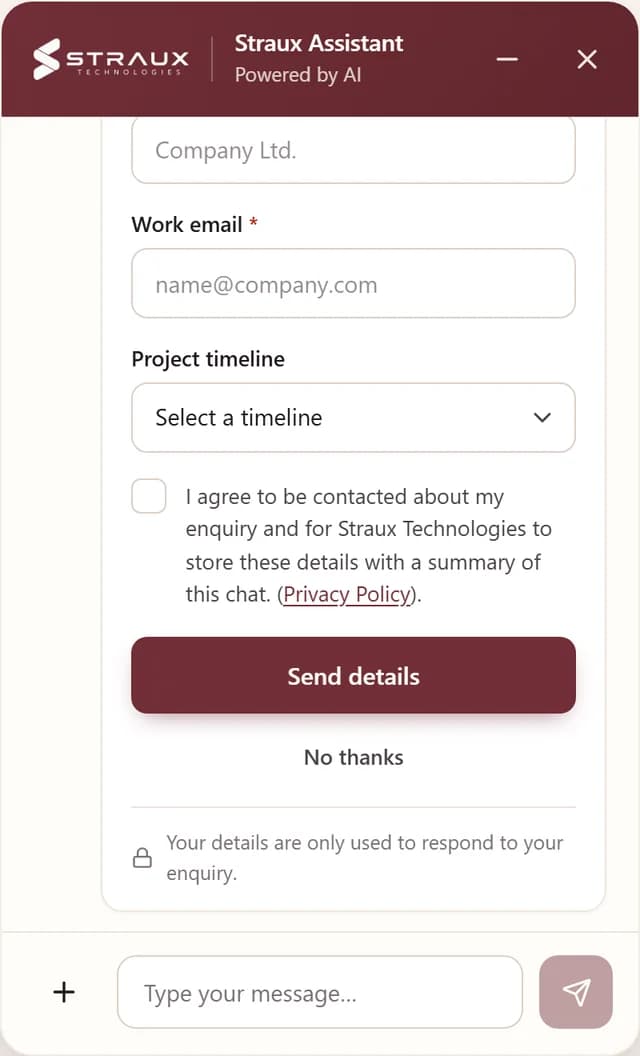
- A short form lets the parent share their details with reception, only if they agree.
Example conversation · Linden is a fictional clinic from our concept demos.
- Answers from your informationReplies come from the pages and documents you approve, with the source shown.
- Guides people to the right next stepIt points visitors to the right service, product or page, one helpful question at a time.
- Brings your team in when it mattersWhen someone needs a person, it asks for their details with consent and passes on a summary.
The same questions, every day.
- Are you open on Saturday?
- Do you cover LS6?
- Do I need to be registered?
- Will it fit my living room?
- How much is a boiler service?
- Can someone come with me?
- What’s your returns policy?
- Which service do I need?
Most of them already have an answer somewhere on your website. An assistant can find it in seconds, at any hour, and hand anything else to your team.
Four conversations it handles well.
Choose a conversation to see the reply, and what happens behind it. Each one uses real information from our concept demos.
- Visitor:
My mum doesn’t speak much English. Can her carer come into the appointment with her?
- Assistant:
Yes. A friend, relative or carer is welcome in the appointment. Linden can also arrange an interpreter if you ask for one when booking.
Source: FAQ: Can someone come with me?
- Visitor:
Can you arrange the interpreter for Thursday?
- Assistant:
I can’t make bookings or arrange interpreters myself. Mention it when you book, or I can pass your request to reception now.
Example conversation · fictional business from our concept demos. Open the demo
Built to be careful with your customers.
The safeguards aren’t an add-on. They’re how the Straux Assistant is built.
- 01
Your customers get answers you’d stand behind.
It answers from the pages and documents you approve, and shows which one an answer came from.
How it works Replies cite the approved documents they relied on, and only link to pages in that approved information.
- 02
It says what it doesn’t know, instead of guessing.
If something isn’t covered, it says so plainly and offers to connect the visitor with your team. It never invents prices, timelines or promises.
How it works These rules are part of its instructions, and it politely declines requests unrelated to your business.
- 03
Nobody is asked for personal details mid-chat.
When someone wants a follow-up, a short form appears, and their details are only shared if they tick the consent box.
How it works Contact details are collected outside the conversation, against a versioned consent notice.
- 04
Your team starts with context, not a cold name.
Each enquiry comes with a one-line summary of what the visitor needs, and their budget and timeline if they mentioned them.
How it works Stated facts are gathered as the chat goes; the priority score is calculated by the system, not by the AI.
- 05
Personal details stay out of the conversation record.
Email addresses, phone numbers and similar details typed into the chat are removed before it is stored or sent to the AI service.
How it works Detected contact details are replaced with placeholders, and each website can only talk to its own assistant.
- 06
It sticks to its rules.
It’s built to resist attempts to make it ignore or reveal its instructions, or drift off-topic, and it refuses clearly harmful requests.
How it works Visitor messages and documents are treated as information, never as instructions, and its tests include deliberate attempts to trick it.
The experience
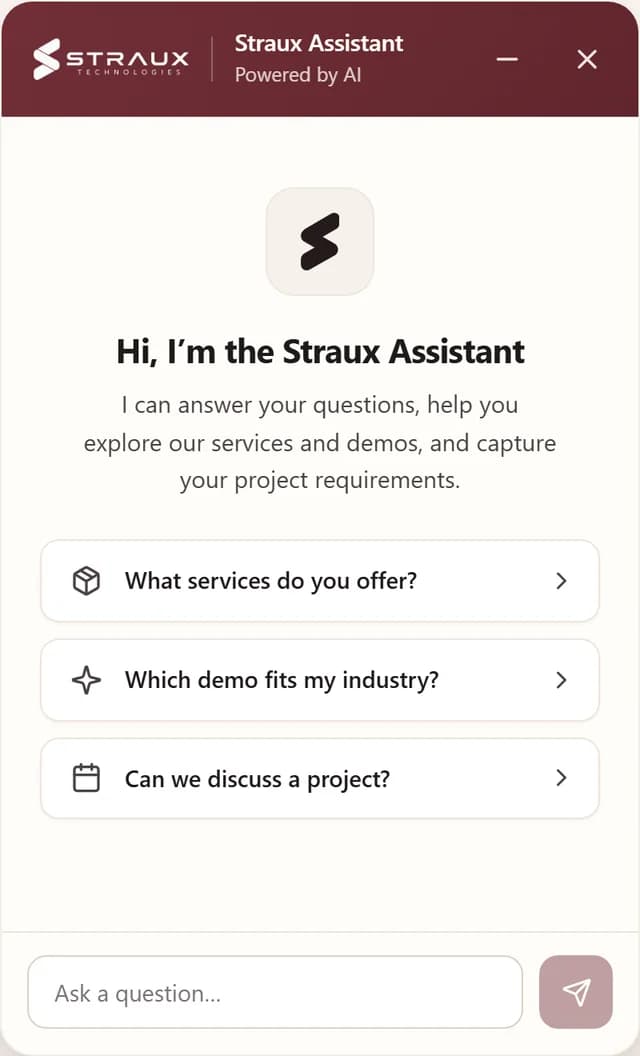
Inside the Straux Assistant.
See the experience your customers can have: clear answers, helpful guidance and an easy way to reach your team when they need a person.
Where the conversation goes next.
When a visitor asks for a follow-up and agrees to share their details, the enquiry is handed to your team with a summary.
Enquiry summary
Need: New website for a small dental practice, fewer phone calls · Service: Websites & Online Stores · Budget: around £8,000 · Timeline: before spring
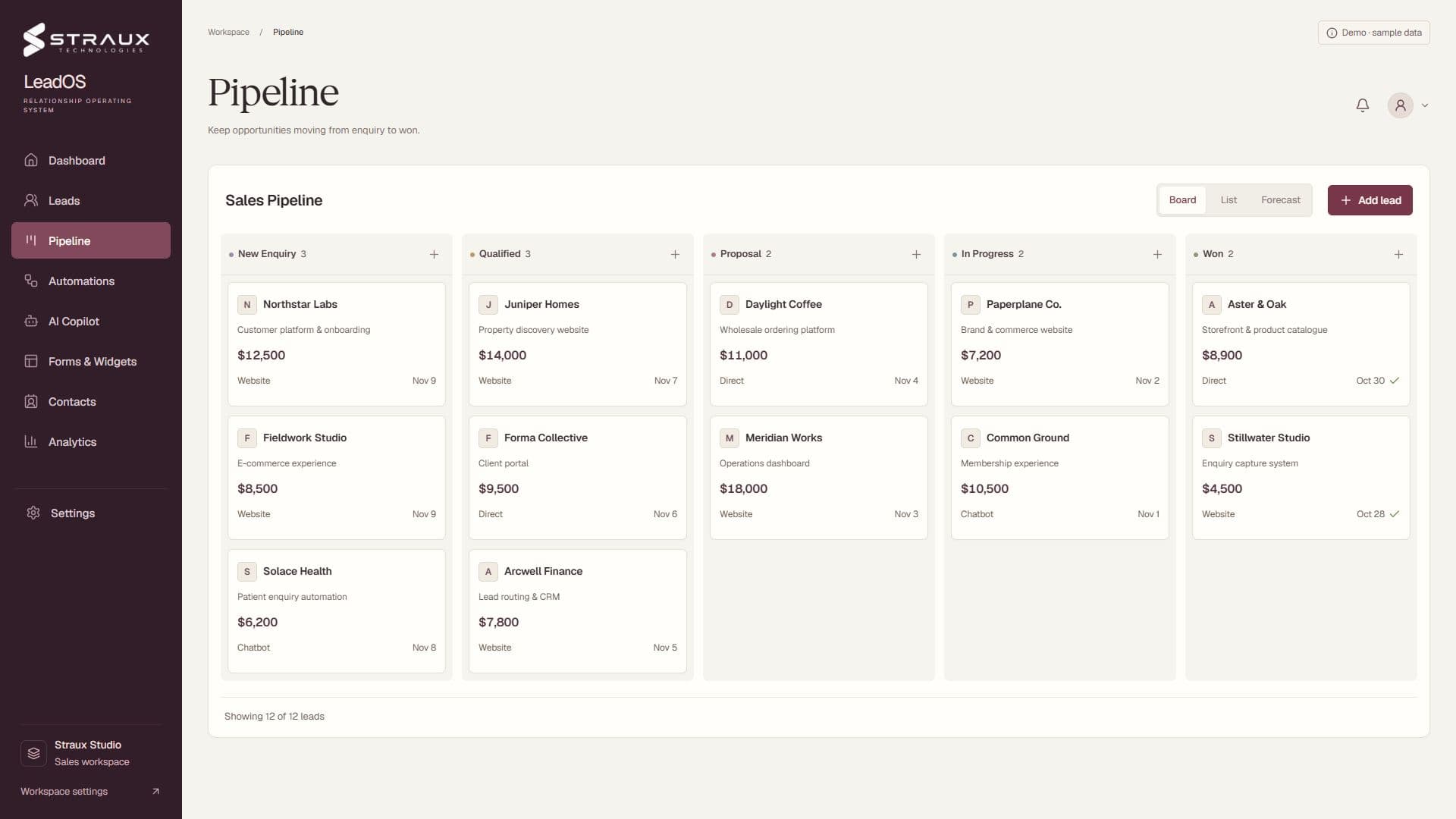
The connection to LeadOS is built and being prepared for launch. The enquiries in this screenshot are sample data.
How we set one up.
- 01
Collect the questions
The questions your team answers every week, and the answers you already give.
From you Your FAQs, policies and price lists, and the topics that must go to a person.
- 02
Agree the limits
What it should answer, what it should never attempt and when it should hand over.
From you Who receives handovers, and the consent wording you’re comfortable with.
- 03
Test with real questions
Common, awkward and deliberately tricky questions, including attempts to talk it off-topic.
From you Time to read its answers and tell us where they’re wrong.
- 04
Launch and review
It goes live on your site, and early conversations are reviewed to improve its information.
From you Updates when your services, prices or hours change.
Questions owners ask.
- Will it always give the right answer?
- No AI is perfect. Answering only from approved information, testing and a clear handover reduce the risk, and sensitive topics can be set to go straight to a person.
- Does it replace my team?
- No. It takes the repeated questions so your team can spend time on the conversations that need a person.
- Can it book appointments, send emails or take payments?
- Not today. Those would each need a separately scoped integration, permissions and testing.
- Who keeps its information up to date?
- We agree who owns each source and how updates are reviewed. When your hours or prices change, its information changes too.
- What does it cost to run?
- There’s the build, and then an ongoing cost for the AI service, which depends on how many conversations you have. We explain the options before you decide.
- What should we send you first?
- A list of the questions you’re asked most, the answers you already give and anything that must always go to a person.
Show us the questions you answer every week.
Bring the questions your team answers most often. We’ll show you how an assistant could handle them, and where your team should stay involved.
Start a conversation